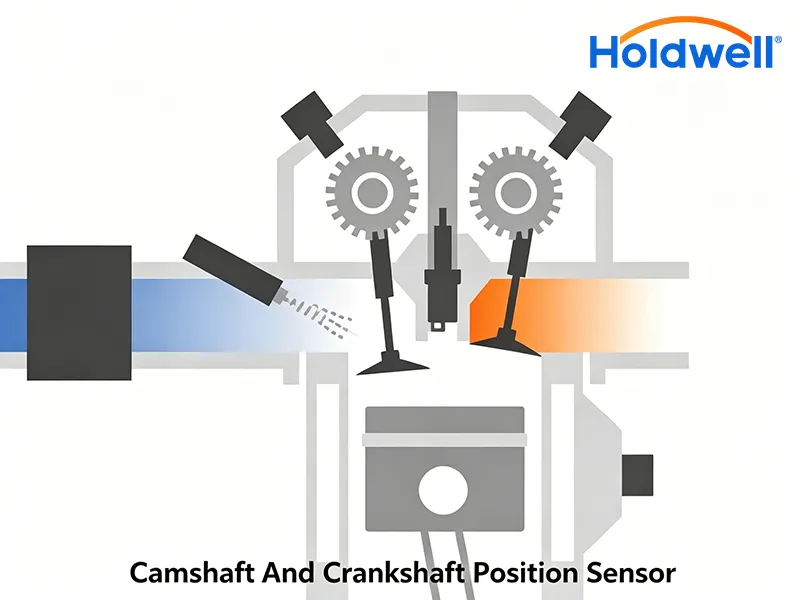
Modern engines depend on precise timing to deliver power, efficiency, and reliability. Two small components play a major role in making that happen: the camshaft position sensor and the crankshaft position sensor.
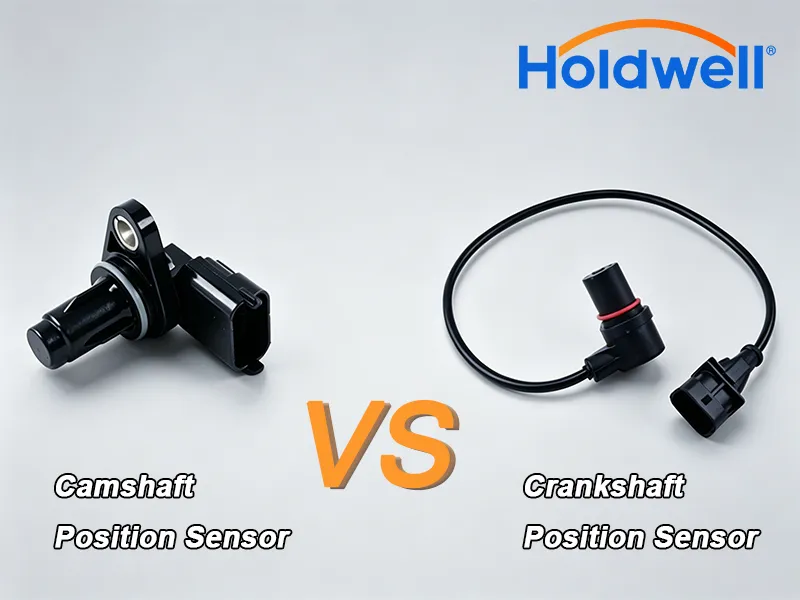
Because both sensors monitor engine rotation and communicate with the engine control module (ECM), they are often confused with one another. In reality, they serve different functions, produce different signals, and cause different symptoms when they fail.
Understanding the difference between a camshaft and crankshaft position sensor is essential for accurate diagnostics and efficient repairs — especially in heavy-duty equipment, diesel engines, agricultural machinery, and industrial applications where downtime directly impacts productivity.
At Holdwell, we work closely with equipment owners and repair professionals worldwide to supply dependable aftermarket engine sensors and replacement parts built for demanding environments. In this guide, we’ll explain how these two sensors work, how they differ, and how to identify failure symptoms before they become major engine problems.
What is a crankshaft position sensor?
The crankshaft position sensor monitors the speed and rotational position of the crankshaft. It provides the ECM with critical information about:
-
Engine RPM
-
Crankshaft angle
-
Piston position
-
Ignition timing reference
-
Fuel injection timing
Without crankshaft data, the ECM cannot properly determine when cylinders should fire.
In many engines, the crankshaft sensor is considered the primary timing reference. If the sensor fails completely, the engine may not start at all.
Common crankshaft sensor locations
Depending on engine design, the crankshaft position sensor may be located:
-
Near the crankshaft pulley
-
On the timing cover
-
Beside the flywheel housing
-
Near the rear main seal area
The sensor reads a reluctor wheel or tone ring attached to the crankshaft.
What is a camshaft position sensor?
The camshaft position sensor tracks the rotational position of the camshaft and helps the ECM determine which cylinder is on its compression stroke.
This information is essential for:
-
Sequential fuel injection
-
Variable valve timing (VVT) systems
-
Ignition synchronization
-
Cylinder identification
-
Emissions control optimization
While the crankshaft sensor monitors overall engine rotation, the camshaft sensor helps the ECM identify valve timing and cylinder sequencing.
Common camshaft sensor locations
Camshaft position sensors are typically installed:
-
On the cylinder head
-
Near the valve cover
-
Adjacent to the camshaft gear
-
At the front or rear of the camshaft housing
Some engines use multiple camshaft sensors for intake and exhaust camshafts.
Camshaft vs crankshaft position sensor: the main difference
The easiest way to understand the difference is this:
-
The crankshaft sensor monitors piston movement and engine speed
-
The camshaft sensor monitors valve timing and cylinder position
Both sensors work together continuously. The ECM compares their signals to ensure proper engine synchronization.
If the signals become misaligned, the ECM may detect timing correlation faults and trigger warning codes.
Why both sensors matter for engine timing
Modern electronically controlled engines rely heavily on accurate timing signals. Even a slight timing error can affect:
-
Starting performance
-
Fuel economy
-
Emissions
-
Engine power
-
Idle stability
The crankshaft sensor usually provides the base timing reference, while the camshaft sensor fine-tunes cylinder-specific operations.
In advanced diesel engines and electronically controlled heavy equipment, these sensors are especially important for achieving precise fuel delivery under varying loads and operating conditions.
Symptoms of a bad crankshaft position sensor
A failing crankshaft sensor often creates severe drivability issues because the ECM loses its primary engine speed reference.
Common symptoms include:
-
Engine cranks but won’t start
-
Sudden engine stalling
-
Intermittent shutdown when hot
-
Rough idle
-
Misfires
-
Loss of RPM signal
-
Check engine light
In many cases, a failed crankshaft sensor can completely disable engine operation.
Because heat commonly affects sensor circuitry, some failures only occur after the engine reaches operating temperature.
Symptoms of a bad camshaft position sensor
Camshaft sensor failures tend to create timing and synchronization problems rather than complete engine shutdown.
Common symptoms include:
-
Hard starting
-
Extended cranking time
-
Reduced fuel efficiency
-
Poor acceleration
-
Rough idle
-
Hesitation during throttle input
-
Transmission shifting issues in some vehicles
-
Check engine light
On engines equipped with variable valve timing systems, camshaft sensor failures may also reduce power and trigger limp mode.
Unlike crankshaft sensor failures, many engines can still run temporarily with a faulty camshaft sensor using backup timing strategies.
Can one sensor affect the other?
Yes. Since the ECM constantly compares both signals, problems with one sensor can sometimes create diagnostic codes related to the other.
For example:
-
Timing chain wear may alter camshaft timing correlation
-
Damaged reluctor wheels may distort sensor readings
-
Wiring issues can interrupt synchronization
-
Improper sensor installation may affect signal accuracy
This is why professional diagnostics should always inspect:
-
Sensor output
-
Wiring integrity
-
Connector condition
-
Mechanical timing components
Replacing sensors without proper diagnosis can lead to repeated failures and unnecessary repair costs.
Which sensor is more important?
Both are essential, but the crankshaft position sensor is generally considered more critical for engine operation.
A failed crankshaft sensor often prevents the engine from starting entirely because the ECM loses its primary RPM and timing reference.
A failed camshaft sensor may still allow the engine to run, although performance and efficiency will usually suffer.
However, modern engines increasingly rely on both sensors working together accurately, especially in electronically controlled diesel systems.
Why sensor quality matters?
Low-quality sensors can create unstable or inconsistent timing signals even when newly installed.
Poor signal quality may result in:
-
Random fault codes
-
Intermittent stalling
-
Hard starts
-
False timing correlation errors
-
Reduced engine efficiency
At Holdwell, we understand the importance of stable signal performance in demanding working environments. Our aftermarket engine sensors are engineered for durability, precise communication, and reliable operation across heavy-duty diesel and industrial applications.
Conclusion
Although the camshaft position sensor and crankshaft position sensor perform different functions, they work together to maintain precise engine timing and efficient operation.
The crankshaft sensor monitors engine speed and piston position, while the camshaft sensor manages cylinder identification and valve timing synchronization. When either sensor fails, the engine can experience serious drivability issues ranging from rough idle to complete no-start conditions.
Understanding the difference between these two sensors helps operators and technicians diagnose problems more accurately, reduce unnecessary parts replacement, and maintain reliable engine performance.
For dependable aftermarket engine sensors and replacement components designed for real-world working conditions, Holdwell continues to support equipment owners and repair professionals worldwide.