For many mower owners and repair shops, PTO clutch failure usually raises one important question:
Can an electric PTO clutch be rebuilt?
Technically, the answer is yes — but only to a certain extent.
Some PTO clutch components can be repaired, adjusted, or replaced individually. However, once internal wear reaches a certain level, rebuilding becomes less practical than upgrading or replacing the clutch entirely. This is especially true for heavily used commercial mowing equipment, where downtime directly impacts productivity.
At Holdwell, we work closely with aftermarket PTO clutch applications for lawn tractors, zero-turn mowers, and commercial landscaping equipment. Over the years, we’ve seen recurring failure patterns in high-hour mower applications — particularly in certain John Deere mower PTO systems.
That experience has pushed us beyond simple replacement supply. In many cases, we focus on improving and optimizing PTO clutch performance through upgraded materials, refined structural design, and stricter durability standards.
Can an electric PTO clutch be rebuilt?
An electric PTO clutch contains both mechanical and electromagnetic components working together under continuous heat and vibration.
Typical components include:
-
Pulley assembly
-
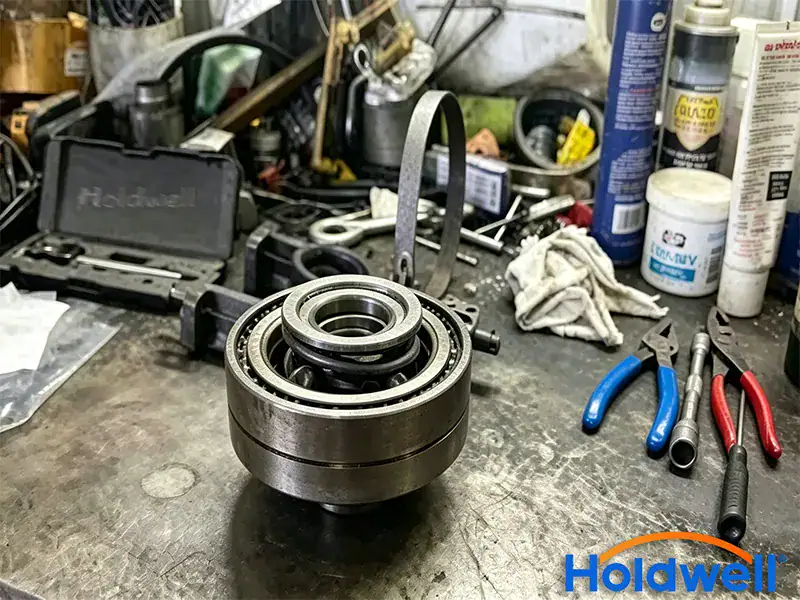
Bearings
-
Electromagnetic coil
-
Friction surfaces
-
Armature plate
-
Rotor
-
Anti-rotation bracket
-
Wiring harness
Some of these parts are serviceable. Others are effectively sealed components.
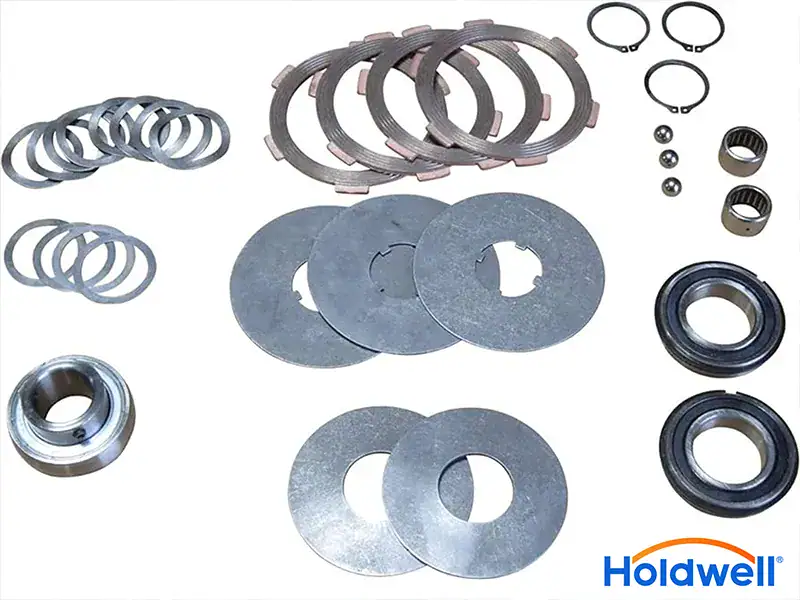
Components that can sometimes be rebuilt:
-
Bearings
-
Hardware
-
Connectors
-
External wiring
-
Friction-related components
Air gap adjustment may also restore engagement performance temporarily.
For lightly worn clutches, this can extend service life.
Why full PTO clutch rebuilding is often limited
The biggest limitation is usually the electromagnetic coil.
Once the coil experiences:
-
Internal short circuits
-
Insulation breakdown
-
Heat damage
-
Excessive resistance changes
repair becomes difficult and inconsistent.
Coil rewinding is technically possible, but in commercial mowing applications, it is often:
-
Labor intensive
-
Costly
-
Difficult to standardize
-
Less reliable long term
This is why many professional repair centers prefer replacement or upgraded assemblies over full rebuild attempts.
Common failure points in John Deere PTO clutches
Through long-term aftermarket experience, we’ve observed several recurring issues in heavily used John Deere mower PTO systems.
These failures are not necessarily design flaws. In many cases, they result from demanding operating conditions:
-
High blade loads
-
Heat buildup
-
Frequent engagement cycles
-
Dust and grass contamination
-
Extended seasonal operation
However, certain components consistently experience accelerated wear.
Heat-related coil degradation
Commercial mowing creates significant thermal stress.
Repeated engagement cycles generate heat inside the electromagnetic coil. Over time, insulation materials may weaken, causing:
-
Weak engagement
-
Intermittent operation
-
Sudden clutch failure
This is one of the most common causes of PTO clutch replacement.
At Holdwell, improving thermal stability is one of the key focuses during PTO clutch optimization.
Bearing wear and vibration
High-speed pulley rotation places constant stress on PTO clutch bearings.
Once bearing wear begins, symptoms often include:
-
Squealing noises
-
Excessive vibration
-
Pulley wobble
-
Premature belt wear
In severe cases, failed bearings may damage surrounding clutch components.
For upgraded John Deere PTO clutch applications, bearing durability becomes a critical reliability factor.
Friction surface wear
Continuous blade engagement under heavy mowing loads gradually wears the friction surfaces.
Excessive wear can lead to:
-
Slipping
-
Overheating
-
Weak engagement
-
Inconsistent blade performance
Improving friction material stability is another important part of PTO clutch optimization.
How Holdwell improves John Deere PTO clutch performance?
At Holdwell, our goal is not simply to copy an existing PTO clutch design.
We focus on building dependable aftermarket solutions that better match real-world operating conditions.
That means paying close attention to:
-
Heat resistance
-
Structural stability
-
Material durability
-
Long-term engagement consistency
Improved bearing quality
Bearing performance directly affects clutch lifespan.
For upgraded John Deere PTO clutch applications, Holdwell emphasizes:
-
Stable high-speed operation
-
Reduced vibration
-
Improved sealing performance
-
Better resistance to contamination
This helps reduce premature bearing-related failures in demanding mowing environments.
Enhanced coil durability
Heat management is one of the biggest challenges for electric PTO clutches.
To improve long-term reliability, Holdwell focuses on:
-
Stable electromagnetic performance
-
Improved insulation durability
-
Better resistance to repeated thermal cycling
The result is more consistent engagement performance during prolonged operation.
Optimized friction materials
PTO clutches experience repeated contact and separation during operation.
Inferior friction materials may:
-
Wear unevenly
-
Generate excessive heat
-
Cause inconsistent engagement
Holdwell PTO clutch optimization includes improving friction stability to support smoother and more reliable blade engagement.
Better structural consistency
Commercial mowing equipment experiences continuous vibration and shock loading.
Small dimensional inconsistencies can eventually affect:
-
Air gap stability
-
Pulley alignment
-
Engagement performance
-
Bearing wear patterns
Holdwell places strong emphasis on dimensional consistency and assembly stability throughout production.
Why upgraded PTO clutches matter for commercial operators
For residential mowing, occasional PTO clutch repairs may be manageable.
But for commercial landscaping operations, downtime becomes far more expensive.
A failed PTO clutch can interrupt:
-
Scheduled mowing routes
-
Seasonal workloads
-
Crew productivity
-
Equipment availability
That’s why many operators prioritize:
-
Reliability
-
Consistent engagement
-
Longer service intervals
-
Reduced maintenance frequency
In these environments, upgraded aftermarket PTO clutch solutions often provide better long-term value than repeatedly rebuilding worn assemblies.
Rebuild or replace: Which is the better choice?
The answer depends on the condition of the clutch.
Rebuilding may make sense when:
-
The coil remains functional
-
Damage is limited to bearings or hardware
-
The clutch housing is still structurally sound
-
Wear is relatively minor
Replacement or upgrading is usually better when:
-
The electromagnetic coil has failed
-
Bearings have caused secondary damage
-
Excessive heat distortion exists
-
Friction surfaces are severely worn
-
Reliability is critical for commercial use
For many professional operators, upgrading to a more durable aftermarket PTO clutch becomes the more practical long-term decision.
Conclusion
So, can an electric PTO clutch be rebuilt?
Sometimes — but not always effectively.
While certain components can be repaired or adjusted, many PTO clutch failures involve internal wear that eventually makes rebuilding less reliable than replacement. For high-demand mowing applications, durability improvements and long-term reliability often matter more than temporary repairs.
At Holdwell, we apply best aftermarket experience to improve PTO clutch performance for demanding mower applications, including popular John Deere platforms. By focusing on bearing durability, thermal resistance, friction stability, and structural consistency, we aim to provide aftermarket PTO clutch solutions built for dependable long-term operation.
Whether your lawn mowers or tractors fail to start, make clicking noises/ burning smell, we hope this guide can help you rebulid your PTO clutches and bring your equipment back. For more details/ professional suggestions, or fetching some indispensable parts, welcome to leave a comment below: