For equipment operators, fleet supervisors and service technicians working across agricultural and construction sectors, the choice between diesel and gasoline power directly affects performance, durability, reliability, noise, and operating costs.
Both engine types serve the same core function: converting fuel’s chemical energy into mechanical power. The difference lies in how combustion is created and controlled.
At Holdwell, we supply engine components, cooling system parts, fuel system parts, and maintenance solutions that help diesel and gasoline engines operate efficiently and reliably.
This guide explains the key differences between diesel and gasoline engines and addresses the questions that matter most in professional equipment management.
How internal combustion engines work?
Before we get to the differences between diesel engines and gaosoline engines, there is there is one thing we must know that both diesel and gasoline engines are internal combustion engines that operate on the same fundamental principle.
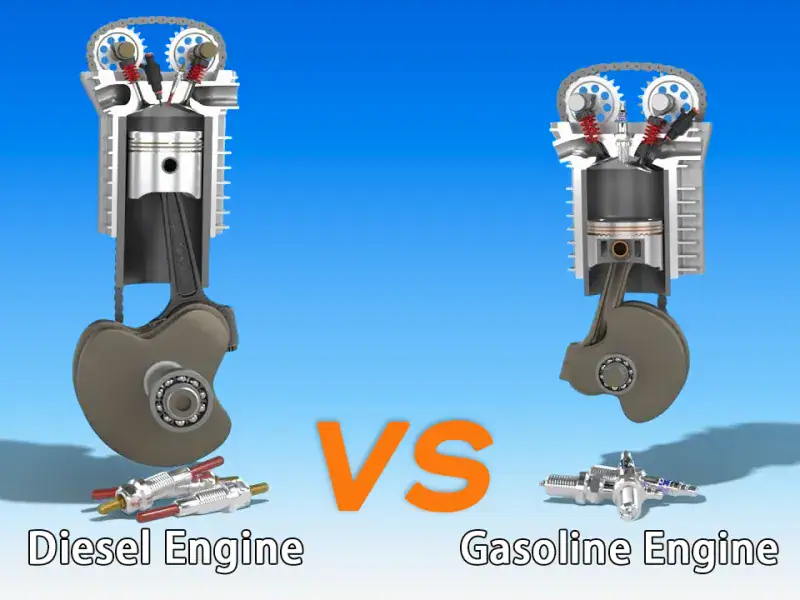
They generate controlled combustion inside cylinders to drive pistons up and down. Connected to a crankshaft via connecting rods, the pistons convert linear motion into rotational force that ultimately powers the wheels or working components.
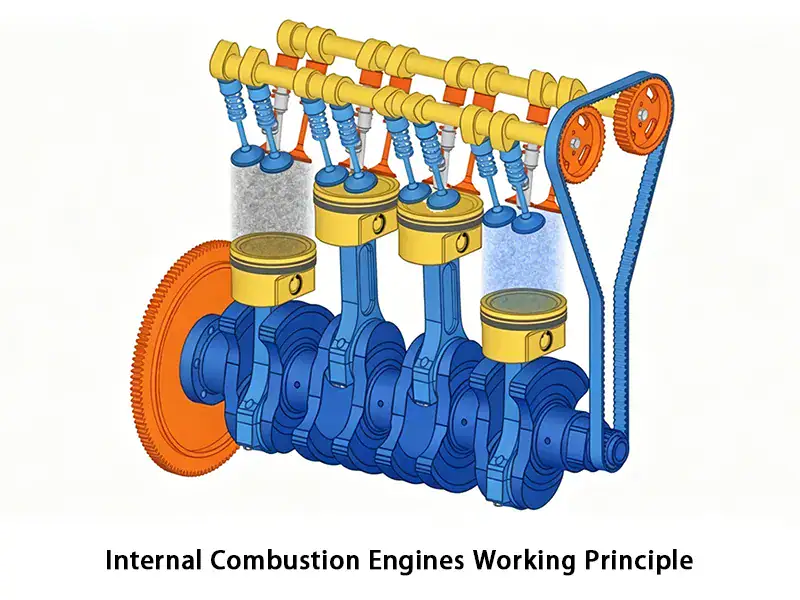
The difference in how combustion occurs
In gasoline engines, fuel mixes with incoming air before being compressed by the piston. A spark plug then ignites the compressed mixture to create power. In diesel engines, only air is compressed inside the cylinder. Fuel is injected later into the intensely hot, compressed air, where it ignites spontaneously without any spark.
This fundamental difference in ignition directly leads to major distinctions in engine design, performance, durability, and operating characteristics.
The key components of internal combustion engines
Both diesel and gasoline engines rely on a four-stroke combustion cycle: intake, compression, combustion, and exhaust. Each system within the engine plays a critical role in overall performance, and understanding these systems helps explain why diesel and gasoline engines behave differently.
The fuel injection system
The fuel injection system delivers precisely metered fuel to the engine at the exact moment required. It consists of low-pressure components including the fuel tank, supply pump, and filter, as well as high-pressure parts such as the injection pump, fuel injector, and nozzle.
The fuel supply pump transfers fuel from the tank to the injection pump, which then delivers pressurized fuel to the cylinders through the injector nozzle.
Diesel engines inject fuel after air compression, requiring significantly higher injection pressure. Gasoline engines premix fuel and air before compression, allowing lower operating pressures.
Fuel characteristics also differ: diesel is denser, less volatile, and evaporates more slowly than gasoline. While diesel produces lower carbon dioxide and methane emissions, it generates higher levels of nitrogen oxides.
Fuel filters protect the engine by blocking harmful particles and moisture from entering the precision fuel injection system.
The lubrication system
The lubrication system circulates filtered engine oil to critical components, including crankshaft bearings, connecting rods, valve mechanisms, timing chains, camshafts, and the contact surfaces between pistons and cylinders. The system includes an oil pump, oil sump, and oil filter to remove contaminants and maintain stable lubrication.
Modern engine oils include advanced additives to reduce friction, resist heat, and minimize long-term component wear.
The cooling system
Internal combustion engines produce extreme heat — enough to cause permanent damage if not properly controlled. The cooling system maintains safe operating temperatures.
The water pump circulates coolant through internal passages in the engine block and cylinder head. As coolant flows, it absorbs heat from hot components. The thermostat regulates temperature; when coolant becomes too hot, it flows to the radiator to be cooled by incoming airflow before recirculating.
Coolants are classified by chemical formulation as inorganic (IAT), organic (OAT), or hybrid mixtures such as HOAT, P-HOAT, and Si-OAT. Each engine type requires a specific coolant formula, and using the correct type is essential to prevent corrosion, overheating, and premature failure.
Exhaust system
Internal combustion engines use aftertreatment systems to control emissions and meet environmental standards.
Diesel engines use diesel particulate filters (DPF), while gasoline engines use gasoline particulate filters (GPF) to trap and reduce soot emissions. Three-way catalysts convert harmful gases into safer compounds, and mufflers reduce operational noise.
Turbocharger
Most modern heavy-duty engines use a turbocharger to force additional air into the combustion chamber, increasing compression and allowing more complete fuel burn. The result is improved power, higher torque, and better fuel efficiency — all from a smaller, more efficient engine package.
Transmission
The transmission transfers power from the engine to the wheels or drive system. Transmissions are either manual or automatic, each requiring specially formulated lubricants.
Key components include the housing, torque converter, hydraulic pump, planetary gears, clutches, and brake bands. Using the correct transmission fluid is essential for smooth operation and long service life.
Electrical system
The electrical system consists of three core parts: the battery, alternator, and starter motor.
The alternator converts mechanical energy into electricity to charge the battery. The starter motor uses battery power to crank the engine into initial rotation. Once the crankshaft begins turning, the combustion cycle takes over.
Engine control unit (ECU)
The Engine Control Unit (ECU) monitors real-time data from engine sensors and adjusts operating parameters for peak performance and efficiency. In gasoline engines, the ECU controls fuel injection and spark timing. In diesel engines, it manages injection timing and pressure. It relies on the crankshaft position sensor to ensure perfectly synchronized operation.
Core differences between diesel and gasoline engines
Both diesel and gasoline engines are internal combustion engines that convert fuel into mechanical power through a four‑stroke cycle: intake, compression, combustion, and exhaust. The single biggest difference lies in how combustion occurs — and this changes nearly every aspect of design, behavior, and performance.
Ignition method
-
Gasoline engines: Air and fuel mix first, then get compressed. A spark plug ignites the mixture.
-
Diesel engines: Only air is compressed to extreme pressure and heat. Fuel is injected later and ignites spontaneously without sparks.
Compression ratio
-
Gasoline engines: 8:1 to 12:1
-
Diesel engines: 16:1 up to 26:1 — much higher, creating intense pressure and heat.
Fuel characteristics
-
Gasoline engines: Light, volatile, fast‑burning.
-
Diesel engines: Denser, less volatile, higher energy density, slower burning, with natural lubricity.
Power & efficiency
-
Gasoline engines: Higher RPM, smoother, quieter, lower thermal efficiency (~30–38%).
-
Diesel engines: Lower RPM, far higher torque, superior thermal efficiency (~40–55%), better fuel economy.
Construction & durability
-
Gasoline engines: Lighter components, shorter typical service life.
-
Diesel engines: Heavier, reinforced parts, longer lifespan, greater reliability under heavy loads.
Emissions
-
Gasoline engines: Higher CO₂, lower particulate matter.
-
Diesel engines: Lower CO₂, higher nitrogen oxides (NOₓ), requiring advanced aftertreatment systems.
Are diesel engines more efficient than gasoline engines?
Yes, diesel engines are significantly more efficient than gasoline engines — and this efficiency comes down to core design differences that directly shape performance, fuel economy, and long-term durability.
Diesel engines operate using compression ignition, which allows them to run at much higher compression ratios (typically 16:1 up to 26:1) compared to gasoline engines (8:1 to 12:1). Higher compression improves thermal efficiency, meaning diesel engines convert a much larger percentage of fuel energy into usable power rather than wasting it as heat.
Diesel fuel itself also has a higher energy density than gasoline, so each unit of fuel delivers more power. As a result, diesel engines achieve 40%–55% thermal efficiency, while gasoline engines usually reach only 30%–38%.
This improved efficiency not only delivers better fuel economy and stronger low-end torque but also reduces internal stress, heat buildup, and unnecessary wear — which naturally leads us to one of the most common questions in heavy-duty trucks:
Why do diesel engines last longer?
Diesel engines routinely outlast gasoline engines — often by 2–3 times longer in industrial settings — for clear engineering reasons:
1. Overbuilt, heavy‑duty construction
Diesel engines are designed for extreme compression. They feature:
-
Thicker cylinder walls
-
Stronger crankshafts and bearings
-
Reinforced pistons
-
Replaceable cylinder liners These components resist wear, fatigue, and deformation far better.
2. Lower RPM operation
Diesel burns slower, so engines run at lower revolutions. Reduced RPM means less friction, less heat, less wear, and longer component life.
3. Natural lubricity of diesel fuel
Diesel fuel provides lubrication for injectors, cylinders, and fuel pumps. Gasoline acts as a solvent, washing away lubrication and increasing long‑term wear.
4. Higher thermal efficiency
Diesel engines waste less energy as heat. Reduced thermal stress protects gaskets, seals, hoses, and the cooling system — extending overall life.
With proper maintenance, industrial diesel engines often reach 10,000 to 20,000+ operating hours before major overhaul.
Are diesel engines more reliable?
Yes — especially for heavy‑duty, agricultural, and industrial use — diesel engines are more reliable for five key reasons:
1. Fewer components that can fail
Diesel engines have no spark plugs, ignition coils, or distributors. Fewer electrical parts mean fewer breakdowns in dusty, wet, high‑vibration environments.
2. Built for harsh working conditions
Their rugged construction withstands dust, moisture, shock, and continuous load far better than gasoline engines.
3. Higher torque reduces mechanical stress
Strong low‑end torque means the engine does not struggle during lifting, pulling, plowing, or hauling. Less strain = longer reliability.
4. Simpler, more robust fuel systems
Diesel fuel systems tolerate impurities better and are easier to service in field conditions.
5. Predictable lifecycles with basic maintenance
Diesel engines thrive on routine care: oil changes, filters, coolant flushes, and fuel system inspections. At Holdwell, we supply the parts that keep them reliable year after year.
Keep your engine running strong with Holdwell
Whether you run diesel or gasoline equipment, reliability depends on high‑quality parts and consistent maintenance.
Holdwell supplies:
-
Pistons, crankshafts, bearings, and cylinder liners
-
Fuel injectors, pumps, filters, and lines
-
Radiators, hoses, thermostats, and cooling system parts
-
Full gasket sets and overhaul kits
-
Filters and wear components for heavy‑duty engines
Every component is engineered for precise fit, long service life, and stable performance in tractors, telehandlers, loaders, and agricultural machinery.
Conclusion
Diesel and gasoline engines each serve important roles, but for heavy‑duty, high‑torque, long‑life operations, diesel remains unbeatable. Understanding their differences helps you choose smarter, maintain better, reduce downtime, and protect your equipment investment.
At Holdwell, we provide the parts and expertise to keep your engines running stronger — for longer.