Introduction
Waste oil treatment has become a necessary cost-saving step for auto repair shops, construction machinery fleets, agricultural equipment operators and waste oil recycling factories globally. A large number of business owners search online for two core demands: figuring out how does a centrifugal oil filter work, and exploring how to make a centrifuge for oil or homemade waste oil centrifuge to cut down oil disposal expense.
Many small business operators initially plan to build their own filtration equipment to refine used motor oil, gear oil and hydraulic oil, hoping to reuse purified oil or sell processed waste oil for profit. However, most DIY attempts end in poor purification effect, frequent breakdowns and hidden safety hazards.
A commercial oil centrifuge is designed to solve all these troubles, becoming the mainstream waste oil processing equipment across mechanical maintenance industries. This article breaks down centrifugal filtration basics, analyzes homemade oil centrifuge defects, and details the practical value of standard waste oil centrifuge for real-world industrial usage.
How does a centrifugal oil filter work?
To pick the right purification gear, users first need to master how does a centrifugal oil filter work, the fundamental theory behind all oil centrifuge products. Unlike traditional cartridge filters that rely on filter paper or filter mesh to block contaminants physically, centrifugal oil filtration uses high-speed rotational centrifugal force to separate mixed impurities inside waste oil.
When waste oil enters the rotating rotor of an oil centrifuge, the rotor spins at rated high RPM under stable motor drive. Due to different specific gravity, solid particles like metal filings, carbon sludge, engine wear debris and free water are heavier than base oil. Under strong centrifugal force, these heavy contaminants get thrown outward and stick tightly on the inner wall of the centrifuge bowl, while clean light-weight refined oil flows out from the central outlet smoothly.
One outstanding advantage of this working mechanism is zero consumable filter elements. Conventional filter-type oil purifiers need regular filter cartridge replacement which raises long-term operating cost, yet waste oil centrifuge only requires regular manual cleaning of sludge deposits inside the rotor. This core working logic applies equally to small inline centrifugal oil filters installed on engines and large standalone industrial oil centrifuge for bulk waste oil regeneration. It can effectively remove free water up to 99% and over 98% of solid contaminants from used lube oil, far exceeding the filtering limit of ordinary screen filters.
How to make a waste oil centrifuge?
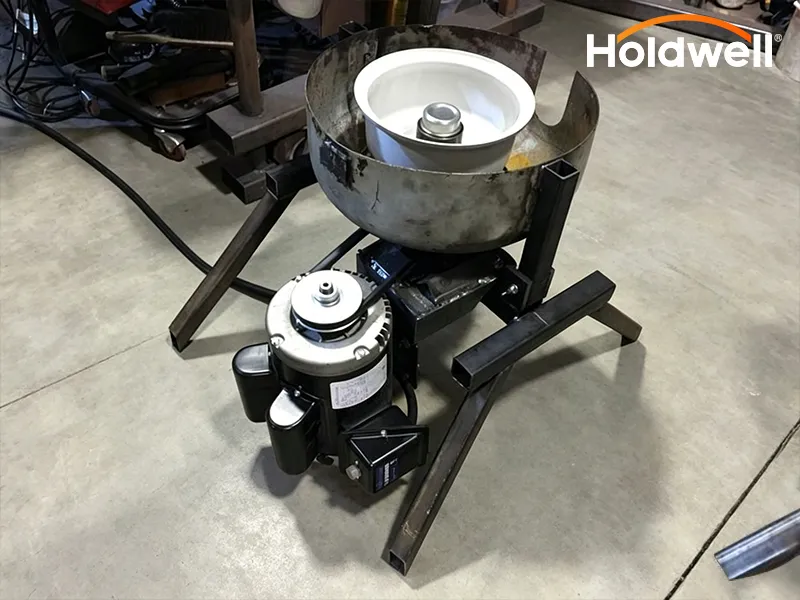
A simple homemade waste oil centrifuge can be easily assembled with common accessible parts, mainly a high-speed motor and a brake disc for stable rotation. The core configuration only requires a high rotating speed and a custom container with an inward-curling lip on the top. The inward lip is a critical design that effectively prevents internal sludge, impurities and splashing hot oil from leaking out during high-speed operation.
For operation, users can pour waste oil directly into the top of the rotating container. As the motor drives the container and brake disc assembly to accelerate, centrifugal force pushes heavy dirt, metal debris and carbon sludge toward the container wall and traps them inside, while clean light refined oil rises along the inner wall under high-speed rotation. Place the entire centrifugal device above a simple collection structure, which can capture the purified clean oil and guide it into an independent oil drum for storage and reuse.
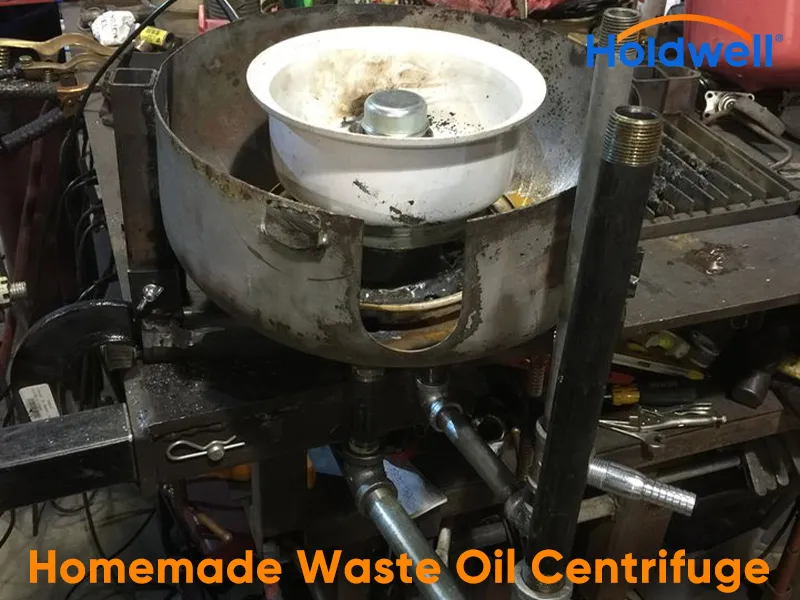
Attentions for homemade waste oil centrifuge
- Ensure the motor and brake disc assembly are firmly fixed before operation to avoid severe vibration, component loosening or flying parts caused by unstable high-speed rotation.
- Strictly control the oil heating temperature; avoid overheating waste oil to prevent oil deterioration, smoke generation or fire hazards.
- Do not overfill the centrifugal container with waste oil to prevent oil overflow and splashing during high-speed operation.
- Clean trapped sludge and impurities on the container wall regularly after each use to guarantee stable centrifugal effect for next operation.
- Keep the working environment ventilated and away from flammable materials to eliminate potential safety risks during waste oil purification.
To ensure qualified purification results with this homemade waste oil centrifuge, follow these essential professional principles for oil cleaning and filtration.
First, an absolute filtration precision of 10 microns is the ideal standard compatible with most vehicle fuel systems.
Second, all free water and suspended water mixed in the waste oil must be thoroughly removed, as moisture can cause engine corrosion and oil deterioration.
Third, oil features lower specific gravity than water and solid contaminants, so gravity sedimentation serves as the fundamental pre-treatment step to separate clean oil from impurities.
Fourth, properly raising the oil temperature can greatly accelerate the speed of sedimentation, centrifugal separation and fine filtration, improving overall purification efficiency.
Why most users fail: Hidden risks of homemade waste oil centrifuge
Driven by low-cost expectations, countless users search guides about how to make a centrifuge for oil and homemade waste oil centrifuge construction tutorials online, using scrap motors, empty metal cans and simple bearing parts for self-assembly. From actual application feedback, DIY waste oil centrifuges have four unavoidable fatal flaws.
First, unstable rotating speed is the biggest problem. Homemade drive assemblies cannot maintain constant high RPM required for complete impurity separation; insufficient centrifugal force leaves fine sludge and emulsified water mixed in processed oil, resulting in unqualified finished oil unable to reuse or resell.
Second, poor dynamic balance of self-made rotor triggers severe vibration during operation, leading to bearing burnout or even rotor cracking with oil leakage risk.
Third, without sealed anti-leakage structure and safety housing, high-speed spinning homemade equipment faces fire risks when hot waste oil splashes onto driving motors.
Fourth, customized size mismatch limits processing capacity; most DIY waste oil centrifuges only handle tiny oil volume, unable to meet daily bulk waste oil purification for repair workshops and fleet maintenance yards.
All these drawbacks explain why experienced waste oil recyclers abandon homemade plans and switch to certified industrial waste oil centrifuge after trial and error.
Advantages of standard industrial oil centrifuge
Professionally manufactured oil centrifuge overcomes all defects of homemade models and brings tangible economic benefits for oil processing enterprises.
Firstly, factory-calibrated motors and dynamically balanced rotors guarantee stable rated rotating speed to realize thorough separation of sludge and water from waste engine oil, hydraulic oil, diesel oil and gear oil.
Secondly, complete safety protection shell, leak-proof sealing design and overload protection greatly reduce on-site operation accidents.
Thirdly, diversified specification options cover small desktop waste oil centrifuge for individual repair shops and large-flow continuous feed oil centrifuge for medium-to-large waste oil recycling plants.
Fourth, no recurring filter consumables cut long-run operational expenditure significantly compared with traditional filter-based purifiers.
For fleet companies with dozens of construction or agricultural machines, regular waste oil treatment via dedicated waste oil centrifuge allows purified oil to reuse for machinery auxiliary lubrication and reduces new oil procurement cost year by year.
Conclusion
In short, understanding how does a centrifugal oil filter work helps users fully recognize the core advantages of professional oil centrifuge over makeshift solutions. While many users look up how to make a centrifuge for oil out of cost-saving thoughts, homemade oil centrifuge is restricted by unstable speed, poor balance and hidden safety hazards and cannot achieve standard oil purification results.
For auto repair shops, machinery fleets and waste oil recyclers, investing in qualified industrial waste oil centrifuge is a cost-effective long-term choice, featuring stable separation performance and zero filter consumables to cut ongoing operating costs. Differentiated from centrifugal clutch lubrication maintenance which belongs to transmission part care, oil centrifuge remains the most practical and reliable option for continuous waste lube oil regeneration and impurity removal.
FAQ
How does a centrifugal oil filter work?
It separates impurities by high-speed centrifugal force based on different specific gravity between base oil and contaminants, as explained above.
Can I build functional equipment following guides of how to make a centrifuge for oil?
Homemade waste oil centrifuge cannot reach industrial purification standard for long-term stable work.
What industries need a waste oil centrifuge most?
Auto repair shops, construction machinery fleets, farm equipment maintenance stations and professional waste oil recycling factories.