A PTO clutch is designed to handle constant engagement, vibration, heat, and debris. Over time, even a well-maintained clutch can begin to slip, stick, or fail completely. The good news is that not every PTO clutch problem immediately requires replacement.
In many cases, adjustment, cleaning, or partial repair can restore proper operation. In others, a full replacement is the smarter long-term solution.
At Holdwell, we support mower owners, repair shops, and commercial landscaping operators with replacement PTO clutches and aftermarket mower parts for a wide range of applications.
This guide explains how to check a PTO clutch, how to adjust and unstick it, and how to remove, install, or replace the assembly properly.
How to check a PTO clutch before replacing it?
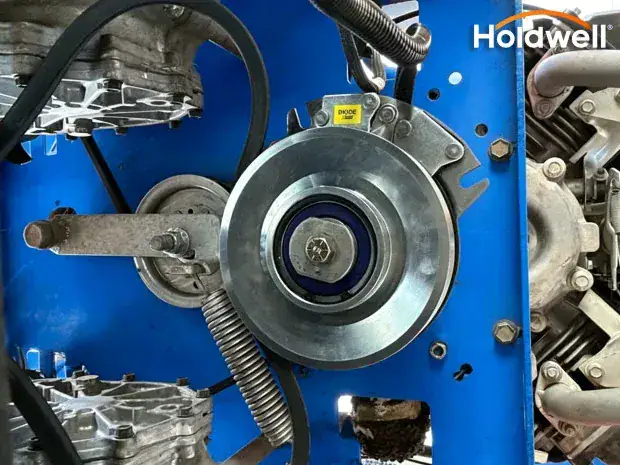
Before removing the clutch, inspect the surrounding system carefully.
Inspect the wiring and electrical connectors: Loose or damaged wiring can interrupt voltage delivery and mimic clutch failure.
Check the belt condition: A worn or stretched belt May create slipping symptoms that resemble a failing PTO clutch.
Inspect pulley alignment: Misalignment can cause vibration, overheating, and premature clutch wear.
Examine mounting hardware: Loose mounting bolts May cause abnormal movement or noise.
In many cases, correcting these external issues restores proper clutch operation without replacing the assembly.
How to adjust an electric PTO clutch?
One of the most common PTO maintenance procedures is air gap adjustment.
As the friction surfaces wear, the gap between the rotor and armature gradually increases. Once the gap becomes too large, the clutch may struggle to engage consistently.
Signs your PTO clutch needs adjustment
-
Delayed blade engagement
-
Weak engagement at high temperatures
-
Intermittent PTO operation
-
Clicking without full engagement
-
Reduced cutting performance
How to adjust PTO clutch air gap?
Most electric PTO clutches include adjustment slots or nuts around the housing.
Basic adjustment steps:
-
Turn off the engine and disconnect the spark plug
-
Locate the adjustment points
-
Insert a feeler gauge evenly around the clutch
-
Tighten or loosen adjustment nuts gradually
-
Recheck the clearance at multiple locations
Small adjustments can make a significant difference in engagement performance.
However, if adjustment no longer restores proper operation, internal wear may already be excessive.
How do you unstick a PTO clutch?
A PTO clutch can sometimes seize after long periods of storage or exposure to moisture.
This issue happens most frequently on seasonal mowing equipment, commercial mowers kept in outdoor storage areas, as well as aged lawn tractors. Long-term idle use and exposure to harsh outdoor conditions easily lead to PTO clutch sticking, rust buildup and performance degradation on these machines.
Common causes of a stuck PTO clutch:
Rust and corrosion: Moisture buildup can cause friction surfaces to stick together.
Heat damage: Overheated clutch plates May warp and fail to separate properly.
Debris accumulation: Grass buildup and dirt can interfere with clutch movement.
How to free a stuck PTO clutch?
Clean the clutch assembly: Remove packed grass, rust, and debris around the clutch housing.
Inspect the air gap: An improperly adjusted air gap can prevent proper disengagement.
Rotate components manually: Carefully rotating the pulley by hand may help free lightly stuck surfaces.
Check for bearing failure: A seized bearing may create the appearance of a stuck clutch.
If the clutch repeatedly sticks after cleaning or adjustment, replacement is usually the more reliable option.
How to remove a PTO clutch bolt?
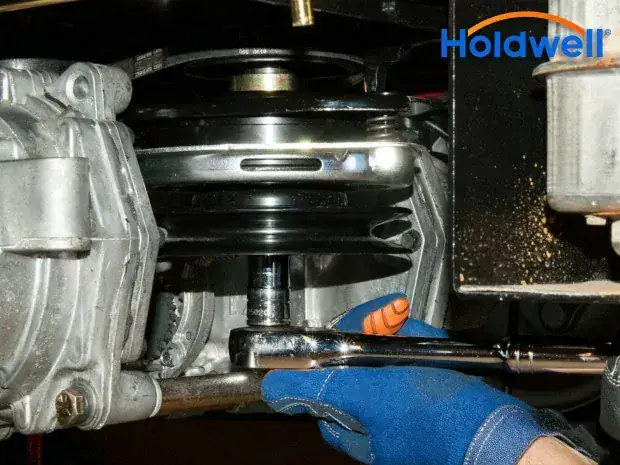
The center retaining bolt is often the most difficult part of PTO clutch removal.
Years of vibration, rust, and thread-locking compounds can make removal challenging.
Tips for Removing a Stuck PTO Clutch Bolt
Apply penetrating oil: Allow time for the oil to work into the threads.
Prevent crankshaft rotation: Use the proper method to hold the crankshaft securely.
Use an impact wrench: Impact tools are often more effective than breaker bars for stubborn PTO bolts.
Apply moderate heat if necessary: Controlled heat May help loosen thread-locking compounds.
Warning: Avoid damaging the crankshaft threads during removal.
Tips for Install a Stable PTO Clutch Bolt
This positioning bolt is specially used to fix and limit the PTO assembly for normal operation. The standard specification for this fitting bolt is 5/16-18 x 5 1/2 inch hex bolt.
Original mowers factory parts are usually Grade 5 strength bolts; for higher safety and durability, it is recommended to replace them with upgraded Grade 8 high-strength bolts.
The bolt is mounted on the right side of the PTO structure and threads into the equipment frame. There are two reserved mounting grooves at both ends of the cable connection position on the PTO, and the bolt can pass through either groove for installation.
It is essential to match with a locking nut for fastening, and tighten it firmly to prevent loosening and falling off caused by long-term mechanical vibration. For double insurance, you can evenly apply a small amount of blue thread locker on the threads before screwing in, to enhance anti-loosening performance.
In addition to the traditional long bolt fixing way, some new clutch accessories are matched with dedicated mounting brackets, which can directly replace the long bolt to complete stable installation.
How to take apart a PTO clutch?
After removal, some users choose to disassemble the clutch for inspection or partial repair.
Depending on the model, disassembly may involve:
-
Snap ring removal
-
Bearing extraction
-
Pulley separation
-
Armature inspection
However, many modern PTO clutches are not designed for full rebuildability.
Improper disassembly can damage:
-
Coil windings
-
Friction surfaces
-
Internal alignment
For heavily worn assemblies, replacement is often more cost-effective than extensive repair work.
How to replace a PTO clutch?
Replacing a PTO clutch is usually the best solution when:
-
The coil fails
-
Bearings seize
-
Engagement becomes unreliable
-
Internal wear becomes excessive
Remove the Old PTO Clutch
Disconnect:
-
Wiring harness
-
Belt system
-
Retaining hardware
Then slide the clutch off the crankshaft carefully.
Inspect Related Components Before Installation
Before installing the new clutch, inspect:
-
Belt wear
-
Crankshaft condition
-
Keyway damage
-
Pulley alignment
-
Electrical connections
Replacing only the clutch while ignoring surrounding issues can shorten service life.
How to install a PTO clutch?
Correct installation is essential for reliable operation.
PTO Clutch Installation Steps:
-
Position the clutch correctly on the crankshaft
-
Align anti-rotation brackets
-
Install the retaining bolt to specification
-
Reconnect wiring
-
Reinstall belts and guards
-
Verify proper air gap clearance
After installation:
-
Test engagement carefully
-
Listen for abnormal noise
-
Confirm smooth blade operation
PTO clutch repair vs replacement: Which is better?
Minor issues such as:
-
Air gap misadjustment
-
Wiring damage
-
Surface rust
-
Bearing wear
may be repairable.
But when the clutch experiences:
-
Repeated overheating
-
Internal coil failure
-
Severe vibration
-
Structural damage
Replacement is generally the more reliable long-term option. For commercial mowing equipment, minimizing downtime is often more important than attempting extensive clutch rebuilding.
Conclusion
A PTO clutch is a high-wear component, but proper maintenance and timely repairs can significantly extend service life.
Understanding how to:
-
Check a PTO clutch
-
Adjust an electric PTO clutch
-
Unstick a seized clutch
-
Remove and install the assembly
-
Decide whether rebuilding is worthwhile
helps reduce downtime and prevent unnecessary damage to the mower deck and drive system.
At Holdwell, we provide aftermarket PTO clutches and replacement mower parts designed for dependable performance across residential and commercial mowing equipment. Choosing quality replacement components helps keep your equipment operating efficiently throughout the season.
If this PTO clutch replacement guide really helps you fix your mowers, we are glad to hear your comments as below: