
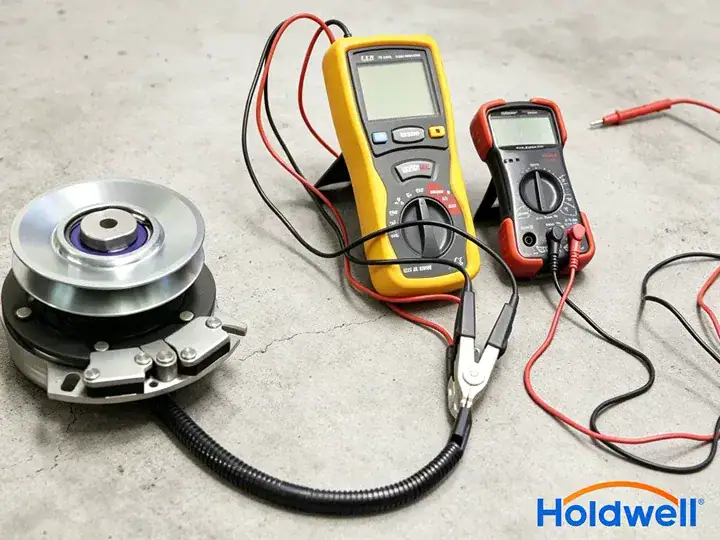
A failing PTO clutch can quickly turn a productive mowing job into unexpected downtime. If your mower blades won’t engage, disengage intermittently, or make unusual noises, the PTO clutch may be the source of the problem.
At Holdwell, we work with replacement parts for lawn mowers, zero-turn mowers, and commercial equipment every day. One of the most common service questions we hear is:
“How do I know if my PTO clutch is bad?”
This guide walks through the most effective ways to test an electric PTO clutch, including multimeter testing, bad PTO clutch symptoms, and basic steps.
What does a PTO clutch do?
The PTO (Power Take-Off) clutch transfers engine power to the mower deck, allowing the blades to engage and spin.
Most modern riding mowers and zero-turn mowers use an electric PTO clutch. When the PTO switch is activated, electrical current energizes the clutch coil, creating a magnetic field that engages the clutch assembly.
When the PTO clutch goes bad, you will encounter multiple abnormal conditions with your mower blades. They may refuse to engage completely, work in an unstable and intermittent way, halt rotation easily when bearing working loads, or give out strange noises and obvious vibration during operation.
How to tell if a PTO clutch is bad?
Before testing the clutch with tools, it’s important to recognize the most common symptoms of PTO clutch failure.
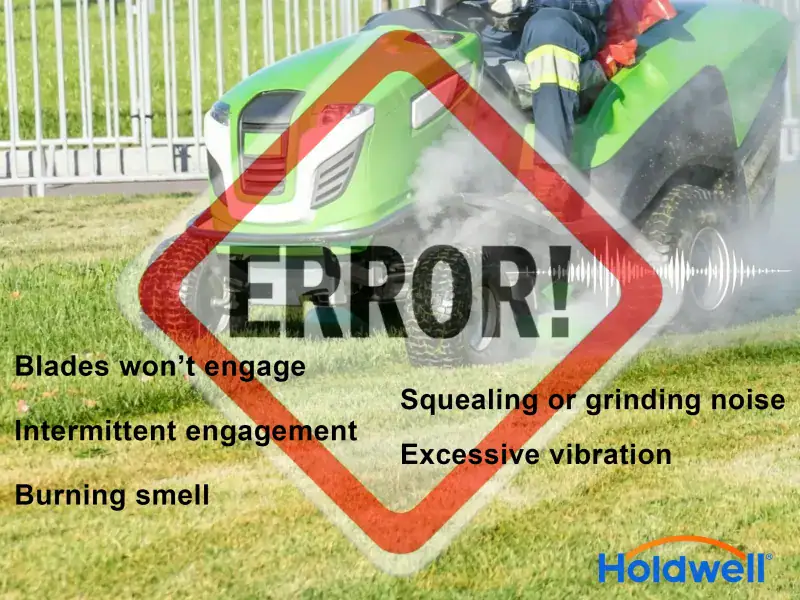
Common signs of a bad PTO clutch
Blades won’t engage: The PTO switch activates, but the mower blades never begin spinning.
Intermittent engagement: The blades work temporarily, then suddenly stop during operation.
Burning smell: Overheating friction surfaces or electrical coil failure may produce a burnt odor.
Squealing or grinding noise: A worn PTO clutch bearing often creates abnormal sounds while running.
Excessive vibration: Damaged internal components can cause shaking during blade engagement.
Inspect visible damage:
-
Melted wires
-
Loose connectors
-
Oil contamination
-
Cracked housings
-
Rust buildup
In many cases, these symptoms worsen gradually before complete clutch failure occurs.
How to test a PTO clutch?
Proper PTO clutch testing involves both mechanical inspection and electrical diagnosis.
Always:
-
Park the mower on level ground
-
Turn off the engine
-
Remove the ignition key
-
Disconnect the spark plug wire for safety
Step 1: Perform a visual inspection
Start with the simplest checks first.
Inspect:
-
Wiring harnesses
-
Electrical connectors
-
PTO switch connections
-
Belt condition
-
Debris buildup around the clutch
Loose or damaged wiring can sometimes mimic clutch failure.
Step 2: Check battery voltage
Electric PTO clutches require proper voltage to engage correctly.
Using a multimeter:
-
A healthy battery should read around 12.6V with the engine off
-
Charging voltage is typically 13.5–14.5V while running
Low voltage may cause weak engagement or clutch slippage.
Sometimes, you may wonder WHY and HOW to test PTO clutch with a multimeter?
Using a multimeter is one of the most reliable ways to diagnose an electric PTO clutch.
Step 3: Disconnect the PTO clutch connector
Locate the electrical connector attached to the PTO clutch assembly and unplug it.
This isolates the clutch for resistance testing.
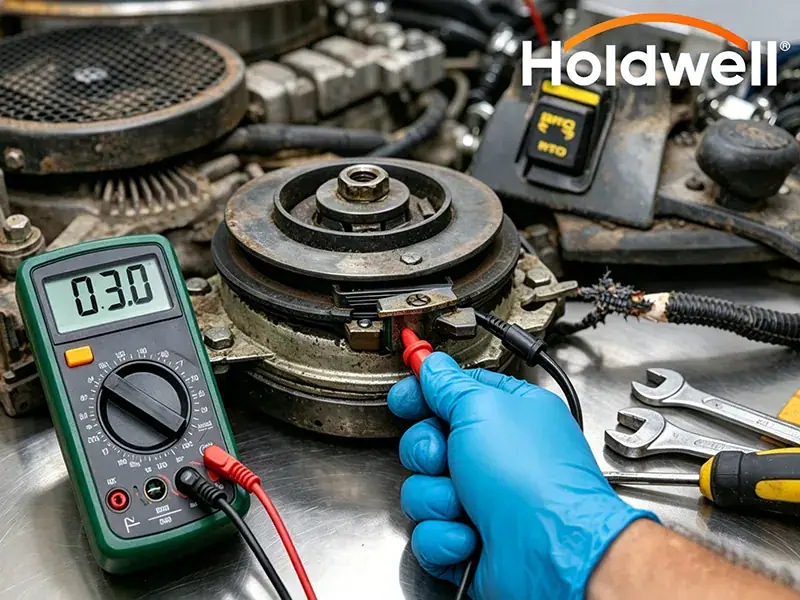
Step 4: Measure coil resistance
Set the multimeter to the ohms (Ω) setting.
Place the probes on the clutch terminals.
Typical PTO clutch resistance values:
-
Commonly between 2–4 ohms
-
Some models may vary depending on manufacturer specifications
What the readings mean?
| Multimeter Reading | Numerical Range | Condition |
|---|---|---|
| OL / Infinite resistance | Above 10 Ω | Open coil (failed clutch) |
| Extremely low resistance | Below 1.5 Ω | Shorted coil |
| Normal resistance | 2.0 Ω – 4.0 Ω | Coil likely functional |
If the reading falls outside specification, the clutch assembly usually requires replacement.
Step 5: Check voltage supply to the clutch
Reconnect the wiring harness.
With the PTO switch activated, measure voltage at the connector.
You should see battery voltage reaching the clutch.
If no voltage is present, the issue may involve:
-
PTO switch failure
-
Blown fuse
-
Faulty safety switch
-
Damaged wiring
-
Weak battery
This step is important because not every PTO engagement problem is caused by the clutch itself.
Step 6: Inspect the air gap
The air gap between the rotor and armature affects clutch engagement performance.
An excessive gap may prevent the clutch from engaging fully.
Typical PTO clutch air gap:
-
Approximately 0.012″–0.018″ on many lawn mowers
Use a feeler gauge to measure the clearance evenly around the clutch.
Some models allow air gap adjustment using adjustment nuts.
How to test a PTO clutch on a lawn mower?
While testing procedures are similar across brands, specifications may vary slightly between mower models.
Common mower brands using electric PTO clutches include:
-
Cub Cadet
-
John Deere
-
Husqvarna
-
Exmark
-
Grasshopper
-
Simplicity
Always refer to the manufacturer’s service manual for:
-
Resistance specifications
-
Torque values
-
Air gap settings
-
Wiring diagrams
How to fix a PTO clutch?
Some PTO clutch issues can be corrected without full replacement.
Air Gap Adjustment
Incorrect clearance is a common cause of weak engagement.
Wiring Repair
Corroded connectors or damaged wires may interrupt power delivery.
Bearing Replacement
If the bearing is noisy but the coil tests properly, bearing replacement may help extend service life.
Cleaning Debris
Grass buildup, oil contamination, and rust can reduce clutch performance.
However, if the electromagnetic coil has failed internally, replacement is typically the most reliable long-term solution.
When should you replace a PTO clutch?
A PTO clutch should generally be replaced if you find:
-
Failed coil resistance readings
-
Repeated overheating
-
Seized bearings
-
Cracked housing
-
Severe vibration
-
Consistent engagement failure
Ignoring PTO clutch problems can eventually damage belts, pulleys, and mower deck components.
Conclusion
Understanding how to test a PTO clutch can help reduce downtime, prevent unnecessary part replacements, and keep your lawn equipment operating efficiently.
The most effective PTO clutch troubleshooting process includes:
-
Visual inspection
-
Battery voltage testing
-
Multimeter resistance testing
-
Voltage supply checks
-
Air gap inspection
At Holdwell, we supply replacement PTO clutches and aftermarket mower parts designed for dependable performance across a wide range of lawn and commercial mowing equipment.
Whether you’re maintaining a residential mower or servicing commercial landscaping machines, choosing quality replacement parts is essential for long-term reliability.
If this guide really helps you succeed in testing your PTO clutchs, we are glad to hear your comments as below: