Many vehicle owners and even entry-level technicians often overlook the importance of the crankshaft position sensor (CKP sensor). Although compact in size, this component plays a critical role in modern engine management systems. Because the CKP sensor serves as one of the engine’s most important signal sources, even minor signal abnormalities can significantly affect engine timing, fuel delivery, and ignition performance.
Before we get access to identify the symptoms of a bad crankshaft position sensor and learn how to fix or replace it, we’d better get to know the crankshaft position sensor well and its specific location.
What is a crankshaft position sensor?
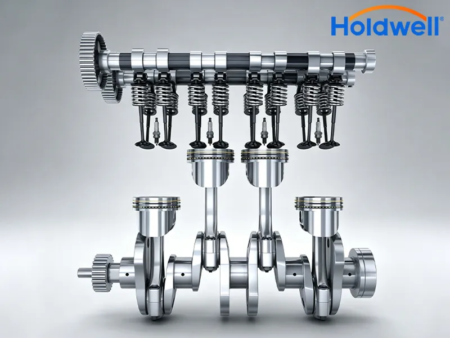
The crankshaft position sensor is a key electronic sensor used in modern gasoline and diesel engines. Its primary function is to monitor the rotational speed and position of the crankshaft and transmit this information to the Engine Control Unit (ECU).
The CKP sensor generally comes in two main types:
-
Magnetic inductive sensors
-
Hall-effect sensors
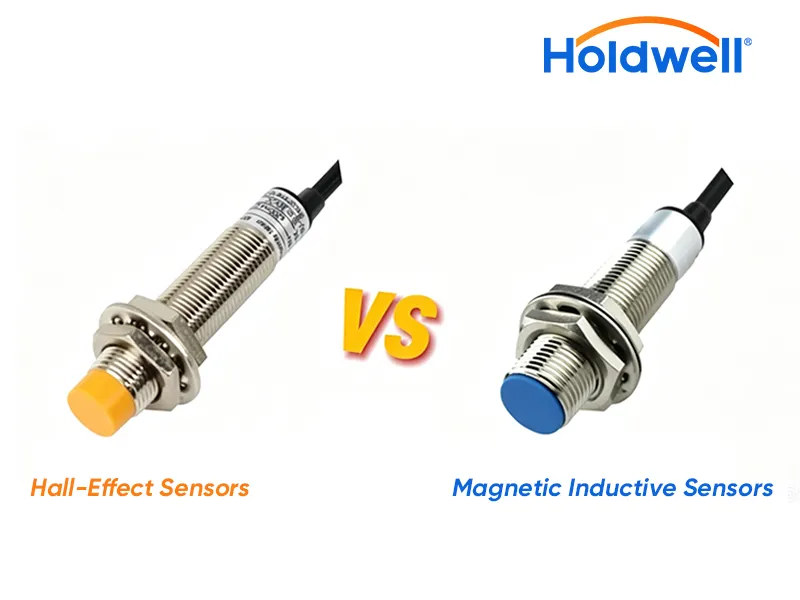
Both sensor types perform the same core task, although their signal generation principles differ. Magnetic inductive sensors generate alternating current signals through magnetic field changes, while Hall-effect sensors produce digital square-wave signals using semiconductor technology.
The CKP sensor works together with the camshaft position sensor to provide the ECU with accurate engine timing data. These signals allow the ECU to determine:
-
Crankshaft rotational speed (RPM)
-
Crankshaft angular position
-
Piston stroke location
-
Cylinder firing sequence
Using this information, the ECU precisely controls ignition timing, fuel injection timing, and engine synchronization. Without reliable CKP sensor input, the ECU cannot accurately determine engine operating conditions, making normal engine operation impossible.
Where is the crankshaft position sensor located?
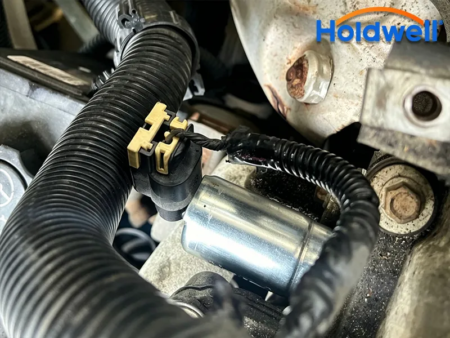
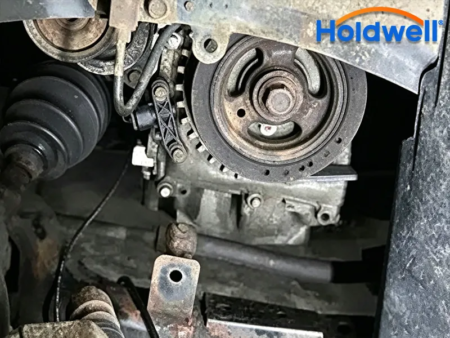
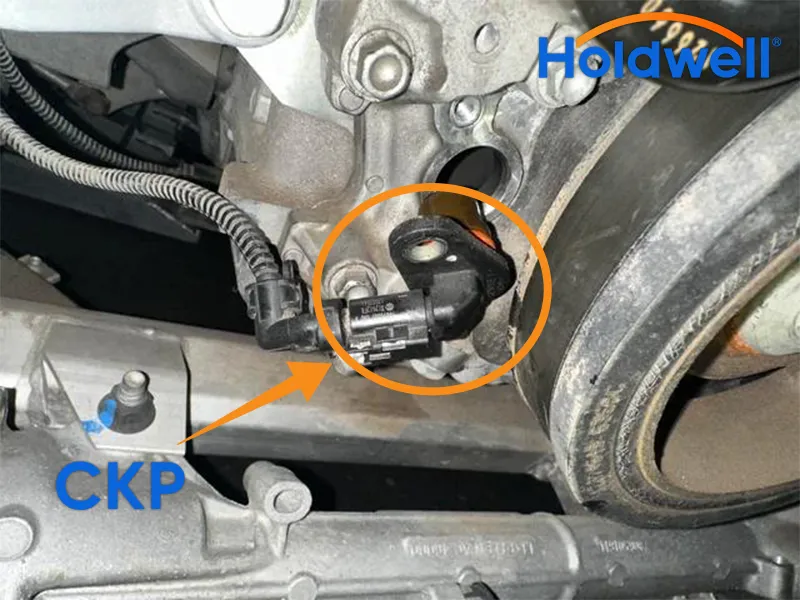
The exact mounting location of a crankshaft position sensor varies depending on engine design and vehicle manufacturer. However, the sensor is always positioned close to the crankshaft assembly to ensure accurate signal detection. It’s important for us to know where is the exact location of the CPK whether we need to
Common CKP sensor installation locations include:
-
Engine block near the crankshaft pulley
-
Transmission bell housing
-
Beside the flywheel or flexplate
-
Near the harmonic balancer
-
Adjacent to the crankshaft reluctor ring
The sensor is aligned with a reluctor or tone ring attached to the crankshaft. As the crankshaft rotates, the teeth on the reluctor ring pass by the sensor tip, generating electrical signals that correspond to crankshaft movement.
In heavy-duty construction equipment, agricultural machinery, and industrial engines, CKP sensors are often mounted in more protected locations to reduce exposure to dirt, vibration, oil contamination, and extreme temperatures.
Although installation positions differ slightly among vehicle models, the operating principle remains the same across most engines.
What does a crankshaft position sensor do?
The CKP sensor is often referred to as the “eyes” of the ECU because it continuously monitors crankshaft activity and provides the ECU with real-time engine operating data.
Its core functions include:
Monitoring engine speed: The sensor tracks crankshaft rotational speed and sends rpm data to the ecu. This information helps regulate fuel injection and ignition timing under different driving conditions.
Detecting crankshaft position: The ecu uses ckp signals to identify the exact crankshaft angle and piston position inside each cylinder. This enables precise combustion timing.
Controlling ignition timing: Spark timing depends heavily on accurate crankshaft position information. If the ignition occurs too early or too late, engine performance and fuel efficiency will suffer.
Managing fuel injection timing: Modern fuel injection systems rely on ckp signals to determine when injectors should open and close. Accurate timing ensures efficient fuel combustion and reduced emissions.
Supporting engine synchronization: The ckp sensor works together with the camshaft position sensor to coordinate cylinder firing order and overall engine synchronization.
Without valid CKP sensor signals, the ECU may disable ignition and fuel injection entirely as a protective measure. In many cases, this prevents the engine from starting.
Conclusion
As the core signal source for engine timing control, the CKP sensor directly governs engine startup reliability and operational stability. Long-term high-temperature exposure, harness wear, and oil erosion are the main causes of sensor aging and failure. Regular inspection and standardized testing can effectively prevent secondary engine faults. For replacement, Holdwell’s high-precision, heat-resistant crankshaft position sensors deliver stable signal output, ensuring long-term, reliable engine performance for diverse vehicles and mechanical equipment.
FAQ
How long does a crankshaft position sensor last?
Most crankshaft position sensors last between 100,000 and 150,000 miles. However, heat, vibration, oil contamination, and poor wiring conditions can shorten lifespan, especially in heavy-duty equipment and industrial engines.
Can a crankshaft position sensor cause a no-start condition?
Yes. If the crankshaft position sensor fails, the ECM may not receive engine timing data, preventing fuel injection or ignition. The engine may crank normally but fail to start.
How many crankshaft position sensors are in a car?
Most vehicles have one crankshaft position sensor, while some advanced engines use two sensors for improved timing accuracy and engine management.
How much does a crankshaft position sensor cost?
The price typically ranges from $30 to $150 for standard vehicles, while heavy-duty or industrial engine sensors may cost more depending on application and specifications. Labor costs vary based on sensor location and installation difficulty.