The engine air filter is one of the simplest components in an engine, yet it plays a critical role in protecting performance, fuel efficiency, and long-term reliability. Every time your engine runs, it draws in a large volume of air for combustion. Along with that air comes dust, dirt, pollen, sand, and other airborne contaminants that can cause premature wear if they enter the engine.
This is why routine engine air filter replacement is an essential part of preventive maintenance. However, many equipment owners and vehicle operators still ask the same questions: How long does an engine air filter last? How often should you change your engine air filter? What are the benefits of changing an engine air filter?
At Holdwell, we help customers maintain everything from passenger vehicles and diesel trucks to generators, agricultural equipment, and small engines. Understanding proper air filter maintenance can help maximize engine life while reducing unnecessary operating costs.
How long does an engine air filter last?
One of the most common questions is: How long does an engine air filter last?
The answer depends largely on the operating environment, equipment type, and air quality conditions.
Under normal driving conditions, many automotive manufacturers recommend replacing the engine air filter every 15,000 to 30,000 miles. However, this guideline is only a starting point.
Several factors can significantly shorten filter life:
-
Frequent driving on dirt or gravel roads
-
Construction site operation
-
Agricultural environments
-
Dusty job sites
-
Off-road applications
-
Heavy towing conditions
-
High annual operating hours
For diesel-powered equipment, commercial trucks, and agricultural machinery, engine air filters are often exposed to much heavier contamination than those found in passenger vehicles. In these situations, filter life is better determined by inspection schedules and air restriction indicators rather than mileage alone.
Similarly, small engines used in lawn mowers, generators, pressure washers, and utility equipment may require more frequent inspections because they often operate directly in dusty outdoor environments.
The key takeaway is that there is no universal lifespan for every engine air filter. Operating conditions matter just as much as mileage or service hours.
How often should you change your engine air filter?
Another frequently asked question is: How often should you change your engine air filter?
While maintenance schedules vary among manufacturers, general recommendations include:
Passenger vehicles
-
Every 15,000–30,000 miles under normal conditions
-
More frequently in dusty environments
Heavy-duty diesel equipment
-
Follow manufacturer service recommendations
-
Monitor air restriction indicators
-
Inspect during routine maintenance intervals
Small engines
-
Inspect before each operating season
-
Check more frequently during heavy use
-
Replace when excessive dirt accumulation is present
Many operators focus solely on mileage, but visual inspection remains one of the most effective ways to evaluate filter condition.
A clean filter typically allows light airflow through the media and shows minimal contamination. A heavily loaded filter may appear dark, clogged, or covered with dust and debris.
If engine performance begins to decline or airflow restriction increases, it may be time for an engine air filter replacement regardless of mileage.
Understanding the engine air filter replacement interval
The proper engine air filter replacement interval should always balance filtration performance with airflow requirements.
Replacing a filter too early may increase maintenance costs unnecessarily. Waiting too long, however, can restrict airflow and negatively affect engine performance.
For many modern engines, manufacturers establish replacement intervals based on extensive testing under average operating conditions. However, real-world environments rarely match laboratory assumptions.
For example:
-
A highway-driven passenger vehicle may exceed the recommended service interval without issue.
-
A construction machine operating in dust may require replacement much sooner.
-
Agricultural equipment working during harvest season may accumulate contaminants rapidly.
-
Commercial landscaping equipment may encounter constant airborne debris.
Because operating conditions vary so dramatically, the best replacement interval combines manufacturer recommendations with regular inspection.
For fleet operators and equipment owners, maintaining a consistent inspection schedule often provides more value than relying solely on mileage or operating hours.
Signs that an engine air filter needs attention
Even before reaching the recommended replacement interval, certain symptoms may indicate airflow restriction.
Common signs include:
-
Reduced engine power
-
Slower acceleration
-
Increased fuel consumption
-
Rough engine operation
-
Excessive black exhaust smoke on diesel engines
-
Reduced throttle response
-
Unusual intake noise
A severely restricted filter limits the amount of clean air reaching the combustion chamber, reducing overall engine efficiency.
In some modern vehicles, airflow-related issues may even contribute to diagnostic trouble codes or trigger a check engine light.
Regular inspection helps identify these problems before they affect engine performance.
Benefits of changing engine air filter
Many operators underestimate the benefits of changing engine air filter elements on a regular schedule.
While the filter itself is relatively inexpensive, its impact on engine protection can be significant.
Improved engine protection
The primary benefit of changing an engine air filter is preventing contaminants from entering the engine.
Dust and abrasive particles can accelerate wear on:
-
Pistons
-
Cylinder walls
-
Valve seats
-
Turbochargers
-
Intake components
Clean filtration media helps maintain long-term engine durability.
Better airflow
As contaminants accumulate, airflow through the filter gradually decreases.
Installing a clean filter restores proper airflow, allowing the engine to operate more efficiently.
Consistent engine performance
Adequate airflow supports proper combustion. When the engine receives the correct amount of clean air, performance remains more consistent across varying operating conditions.
Improved fuel efficiency
Restricted airflow can reduce combustion efficiency and increase fuel consumption.
While replacing a dirty filter may not produce dramatic fuel savings in every situation, maintaining proper airflow helps support optimal fuel economy.
Reduced maintenance costs
Contamination-related engine wear can be extremely expensive to repair.
Routine engine air filter replacement is a simple preventive maintenance practice that helps reduce the risk of costly engine damage.
Longer component life
Clean intake air benefits more than just the engine itself.
Components that may benefit include:
-
Turbochargers
-
Mass airflow sensors
-
Intake sensors
-
Emissions systems
-
Fuel injection components
By reducing contaminant exposure, these systems can maintain performance for longer periods.
How to replace an engine air filter?
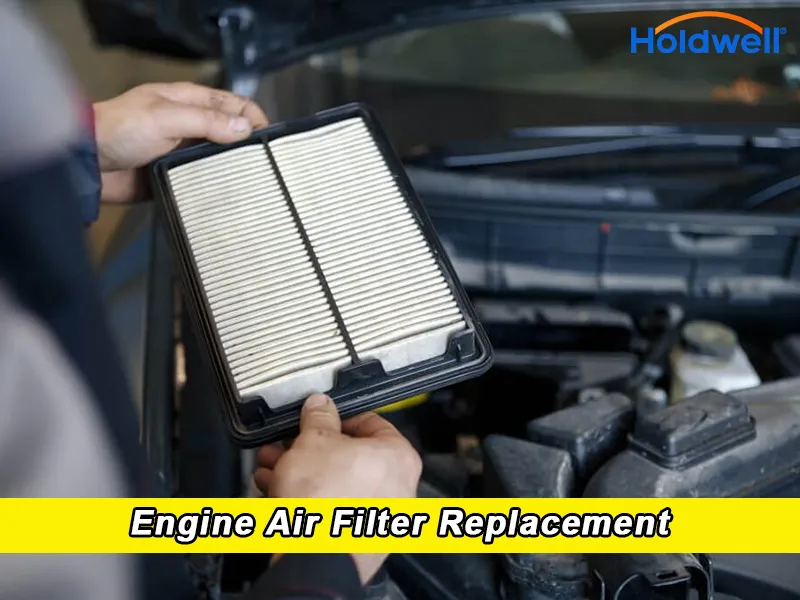
Fortunately, how to replace an engine air filter is one of the easiest maintenance procedures on most equipment.
Although designs vary among manufacturers, the process generally follows these steps:
Step 1: Locate the air filter housing
The engine air filter is typically housed inside a plastic or metal air cleaner assembly connected to the engine intake system.
Step 2: Open the housing
Remove clips, screws, or fasteners securing the air filter cover.
Step 3: Remove the old filter
Carefully remove the existing filter element and inspect it for dirt accumulation, damage, or excessive restriction.
Step 4: Clean the housing
Wipe away loose debris inside the air filter housing to prevent contaminants from entering the intake system.
Step 5: Install the new filter
Position the new engine air filter correctly according to the housing design.
Step 6: Secure the cover
Reinstall all clips, screws, or fasteners and verify that the housing is properly sealed.
A properly seated filter is essential because even a small gap can allow unfiltered air to bypass the filtration media.
Conclusion
The engine air filter serves as the first line of defense against harmful contaminants entering the engine. Understanding how long an engine air filter lasts, following the proper engine air filter replacement interval, and recognizing the benefits of changing engine air filter elements can help maximize equipment reliability and longevity.
Whether you’re maintaining a passenger vehicle, a heavy-duty diesel engine, agricultural equipment, or a small-engine application, routine engine air filter replacement remains one of the simplest and most cost-effective maintenance practices available.
At Holdwell, we understand the importance of clean air for engine performance. High-quality filtration helps protect critical engine components, maintain efficiency, and keep equipment operating reliably in demanding environments.