Oil contamination is one of the most overlooked causes of equipment wear and unexpected downtime.
Whether you’re operating diesel engines, hydraulic systems, agricultural machinery, generators, construction equipment, or industrial gearboxes, contaminants constantly find their way into lubricating oil. Soot, metal particles, oxidation byproducts, dust, water, and sludge gradually accumulate inside the system. Over time, these contaminants accelerate component wear, reduce lubrication performance, increase maintenance costs, and shorten equipment life.
So, how can operators keep oil cleaner for longer without constantly replacing it?
The answer is often an oil centrifuge(centrifugal oil filter).
At Holdwell, we understand that maximizing equipment uptime starts with protecting the fluids that keep machinery running. An oil centrifuge provides an effective solution for removing harmful contaminants that traditional filters often struggle to capture.
What is an oil centrifuge?
An oil centrifuge is a mechanical separation device that removes contaminants from oil using centrifugal force.
Instead of relying solely on conventional filter media, an oil centrifuge spins oil at extremely high speeds, creating forces thousands of times stronger than gravity. Under these conditions, heavier contaminants are separated from the oil and forced outward, while the cleaned oil remains closer to the center and returns to the lubrication system.
The result is cleaner oil, reduced wear, and longer service intervals.
Oil centrifuges are commonly used in:
-
Diesel engines
-
Hydraulic systems
-
Gearboxes
-
Industrial lubrication systems
-
Marine engines
-
Power generation equipment
-
Heavy construction machinery
-
Agricultural equipment
Because they can remove extremely fine particles that may pass through standard filters, oil centrifuges have become an important tool in modern preventive maintenance programs.
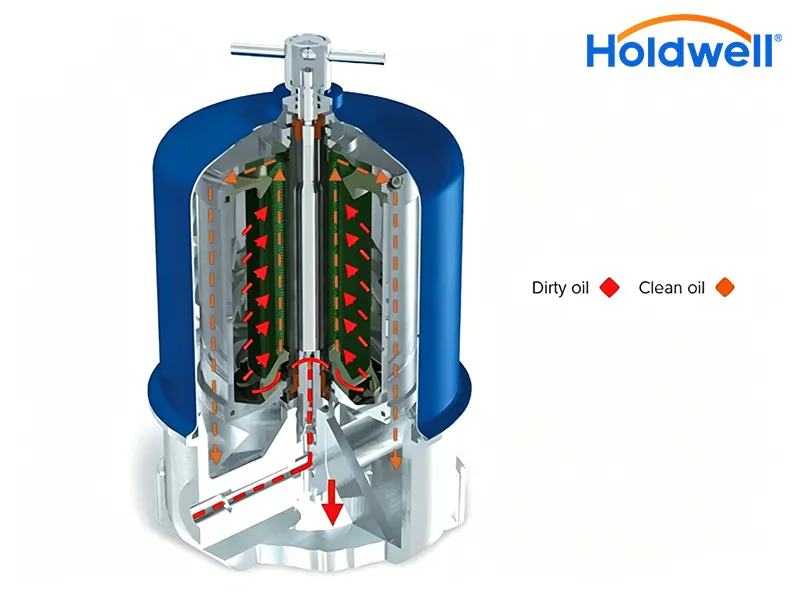
How does an oil centrifuge work?
The operating principle is surprisingly simple.
Contaminated oil enters the centrifuge through an inlet supplied by engine oil pressure or an auxiliary pump.
Once inside, the oil is directed into a rotating bowl that spins at very high RPM. As rotational speed increases, centrifugal force separates materials according to their density.
Heavy contaminants such as:
-
Carbon soot
-
Metal wear particles
-
Sludge
-
Dirt
-
Oxidation residues
are pushed toward the outer wall of the bowl.
Meanwhile, the cleaned oil remains closer to the center and flows back into the engine sump, hydraulic reservoir, or lubrication tank.
Over time, contaminants accumulate along the bowl wall, forming a dense sludge layer that can be removed during routine maintenance.
Unlike disposable filters that trap particles inside filter media, centrifuges physically separate contaminants from the oil itself.
Why traditional filters are not always enough?
Many equipment owners assume that a standard oil filter removes all contaminants.
In reality, conventional filters face limitations.
To maintain sufficient oil flow, filters must balance filtration efficiency with pressure restriction. As a result, extremely fine particles may continue circulating through the system.
These microscopic contaminants are often responsible for long-term wear because they repeatedly pass through critical components such as:
-
Bearings
-
Crankshafts
-
Camshafts
-
Hydraulic pumps
-
Injectors
-
Gear teeth
Oil centrifuges complement traditional filtration systems by targeting fine contaminants that are difficult to capture through standard filter elements.
The combination of conventional filtration and centrifugal separation creates a more comprehensive oil-cleaning strategy.
What contaminants can an oil centrifuge remove?
One of the biggest advantages of centrifugal oil cleaning is its ability to remove a wide range of harmful contaminants.
These include:
Soot: Diesel engines naturally generate soot during combustion. Excessive soot thickens oil and increases abrasive wear.
Metal Wear Particles: Normal operation produces microscopic metal fragments from bearings, gears, pistons, and shafts.
Sludge: Oil oxidation and contamination can create sludge deposits that restrict lubrication and reduce heat transfer.
Dirt and dust: Airborne contaminants frequently enter lubrication systems despite filtration measures.
Water contamination: Some centrifuge systems can also help separate water from oil, reducing corrosion risks and lubricant degradation.
By continuously removing these contaminants, oil centrifuges help maintain lubricant quality and system performance.
Key benefits of using an oil centrifuge
Improved oil cleanliness
The most obvious benefit is cleaner oil. Removing contaminants helps preserve the oil’s original properties and improves lubrication performance throughout the service interval.
Reduced component wear
Clean oil creates a stronger lubricating film between moving surfaces. This minimizes friction and protects expensive components from premature wear.
Extended oil change intervals
When supported by proper oil analysis programs, cleaner oil often allows operators to safely extend drain intervals. This reduces lubricant consumption and maintenance costs.
Lower maintenance expenses
Less contamination means fewer component failures, fewer repairs, and reduced labor requirements.
Increased equipment uptime
Unexpected downtime can be costly. By improving lubrication system cleanliness, oil centrifuges help reduce breakdown risks and increase operational reliability.
Environmental benefits
Longer oil life means less waste oil generation and lower disposal costs, supporting more sustainable maintenance practices.
How to size an oil centrifuge correctly?
Selecting the correct centrifuge is essential for achieving optimal performance.
Several factors should be considered during sizing:
Oil flow capacity
A common guideline is that the centrifuge should process approximately 10% of the oil pump’s output capacity. This allows continuous cleaning without negatively affecting lubrication system pressure.
Oil volume turnover
Ideally, the centrifuge should process the entire oil volume multiple times per hour. Frequent circulation improves contaminant removal efficiency and maintains cleaner oil conditions.
Proper return line design
The clean oil return line should allow unrestricted gravity drainage back to the sump or reservoir. Improper return routing can reduce separation efficiency and create operational issues.
Because every application differs, equipment specifications, oil capacity, operating conditions, and contamination levels should all be evaluated before selecting a centrifuge.
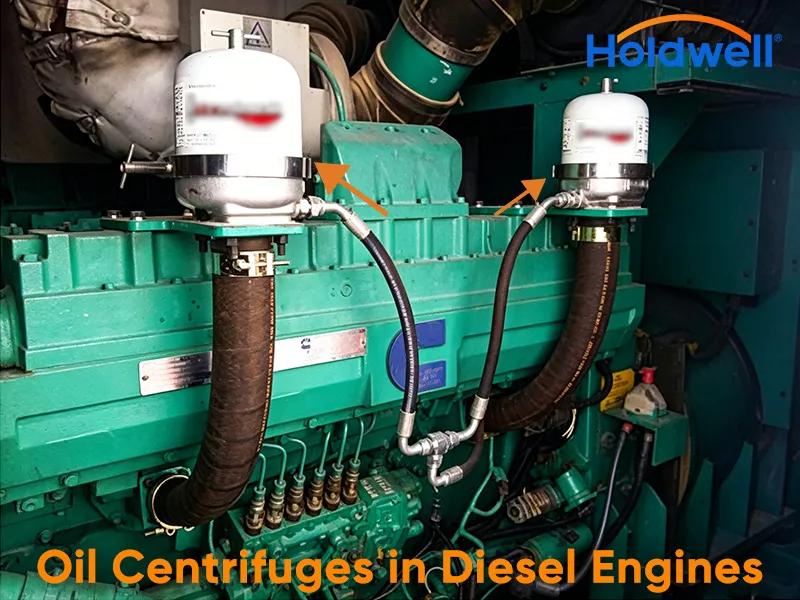
Oil centrifuges in diesel engines
Diesel engines represent one of the most common applications for centrifugal oil cleaning.
Modern diesel engines generate significant amounts of soot due to combustion processes. While conventional filters capture larger particles, extremely fine soot often remains suspended in the oil.
As soot concentrations increase, oil viscosity changes and wear rates rise.
An engine oil centrifuge continuously removes these particles, helping operators maintain cleaner oil and protect critical components such as:
-
Crankshafts
-
Connecting rod bearings
-
Camshafts
-
Turbochargers
-
Pistons
-
Valve train assemblies
Why oil cleanliness matters more than ever?
Today’s engines and hydraulic systems operate under tighter tolerances than ever before.
Components are designed for maximum efficiency, but smaller clearances also make them more sensitive to contamination.
Even tiny particles can cause significant wear when circulated repeatedly through high-pressure systems.
As equipment becomes more sophisticated and replacement costs continue to rise, maintaining oil cleanliness has become a critical part of asset management.
An motor oil centrifuge is not simply an accessory—it is an investment in equipment protection.
The bottom line
So, what is an engine oil centrifuge?
It is a highly effective oil-cleaning solution that uses centrifugal force to separate contaminants from lubricating oil, hydraulic oil, and other industrial fluids.
By removing soot, sludge, wear metals, and other harmful particles, oil centrifuges help improve lubricant quality, reduce maintenance costs, extend equipment life, and increase operational reliability.
At Holdwell, we recognize that protecting your equipment starts with protecting the fluids that keep it running. Whether you’re maintaining diesel engines, hydraulic systems, or industrial machinery, implementing effective oil-cleaning strategies can significantly improve long-term performance and reduce total operating costs.
Cleaner oil means healthier equipment—and healthier equipment means greater productivity, reliability, and profitability.